
Why the Bedroom Is the Last Space We Design for Ourselves
Most rooms in the home are designed with someone else in mind. The living area is arranged for guests. The kitchen is shaped around movement and function. Outdoor spaces are considered through how they are seen and shared. Even hallways — rooms nobody really occupies — tend to receive deliberate attention because they form first impressions.
The bedroom is left until last. It becomes a room of necessity rather than intention. A place where the day ends, where furniture was moved in and never reconsidered, where design decisions were made quickly and then quietly forgotten.
This is a quiet contradiction. The bedroom is the most private room in the home, and the most consistently used. It is where we begin and end every day. And yet it is the room that receives the least considered attention of all.
Why the Bedroom Gets Left Behind
There is a practical reason for this. Because the bedroom is private, it is easy to delay. Energy goes toward shared spaces — rooms that are seen by others, used throughout the day, and tied to how the home presents itself to the world. The bedroom, visible to almost no one, falls to the bottom of the list.
Over time, this creates a gap. The room becomes functional but not intentional. It works, in the sense that it contains a bed and a place to store clothes. But it does not fully support the experience of being in it. Something is missing, even if it is difficult to name.
The opportunity, when attention finally returns to the bedroom, is significant. Because it starts from so little, even considered changes have a strong effect. The space begins to feel complete — not through accumulation, but through intention.

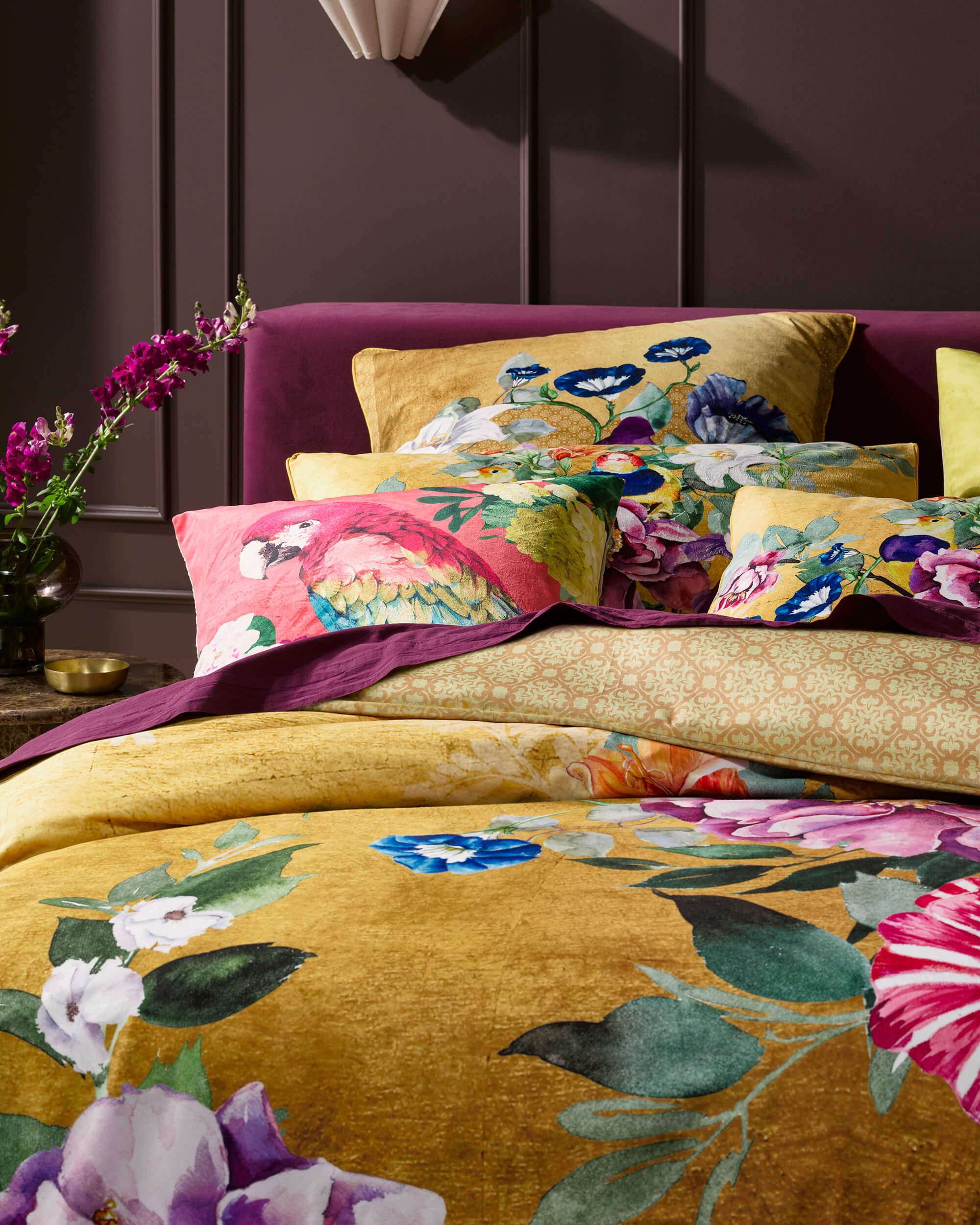
Marceline Mustard Quilt Cover Set. Original hand-painted artwork designed for bedrooms that are chosen rather than settled for. View Marceline Mustard →
A Space That Belongs Only to You
Unlike every other room in the home, the bedroom does not need to accommodate anyone else. It does not need to impress, or to function as a backdrop for other people's comfort. It exists entirely outside of expectation.
This creates a different kind of design freedom. Choices can be made based on feeling rather than convention. Colour can be chosen because it produces a particular emotional response, not because it coordinates with the rest of the home. Pattern can be bold because no one else needs to be comfortable with it. Material can be chosen purely for how it feels.
Most people do not take this freedom. They design the bedroom conservatively — neutrals, familiar formats, nothing that feels like a risk — because they have spent so long designing for other people that designing purely for themselves feels unfamiliar.
The result is a room that could belong to anyone. Which, in the most personal room in the home, is a loss.
Three things that change when the bedroom is designed with intention
Rest improves
A room that feels considered — in colour, fabric, and atmosphere — creates the conditions for more restorative sleep.
The room earns presence
Design decisions made for yourself rather than for others create a room that feels genuinely inhabited, not furnished.
The choice becomes yours
The bedroom is the one room where design can exist entirely outside of external expectation. That freedom is worth using.
The Bed as a Personal Surface
At the centre of the bedroom is the bed. It is the one element that is used every day without exception, and yet it is the element most often treated as settled — chosen once, arranged, and then left unchanged indefinitely.
When the bed is reconsidered, it changes the atmosphere of the entire room. Its colour, its pattern, the visual weight it carries — all of these contribute to how the space feels, not in the background, but actively, as the first and last thing encountered in every day.
Within the Luxotic Signature Series, bedding is designed as a form of expression rather than a background element. Each piece begins as original hand-painted artwork, carrying a sense of identity into the room. The design is the point — not a supplement to the space, but the reason the space feels the way it does.
This allows the bed to hold presence without requiring anything else. It becomes something to return to, rather than something to arrange.

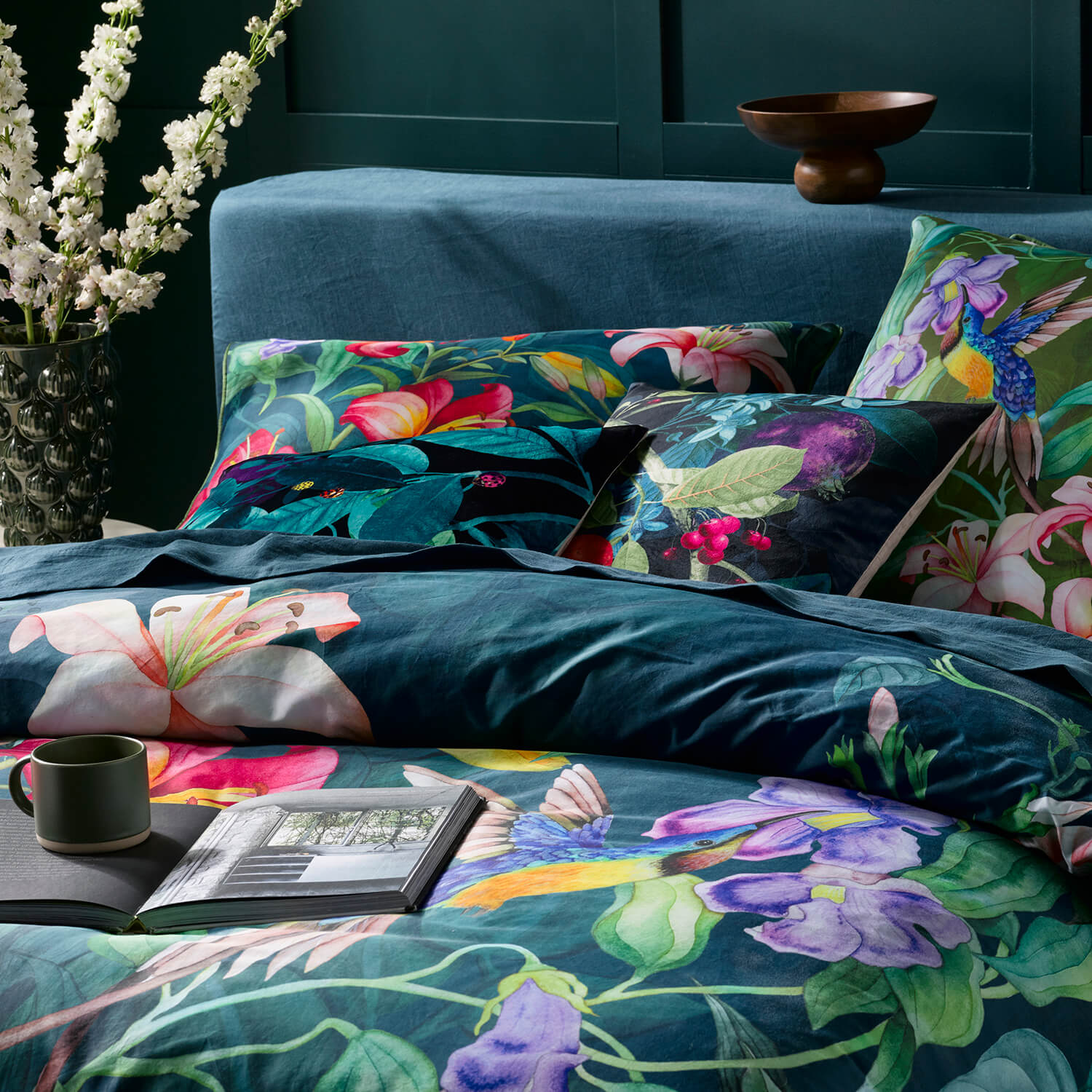
Azura Selva. Botanical and layered — for bedrooms that feel lush rather than restrained. View Azura Selva →

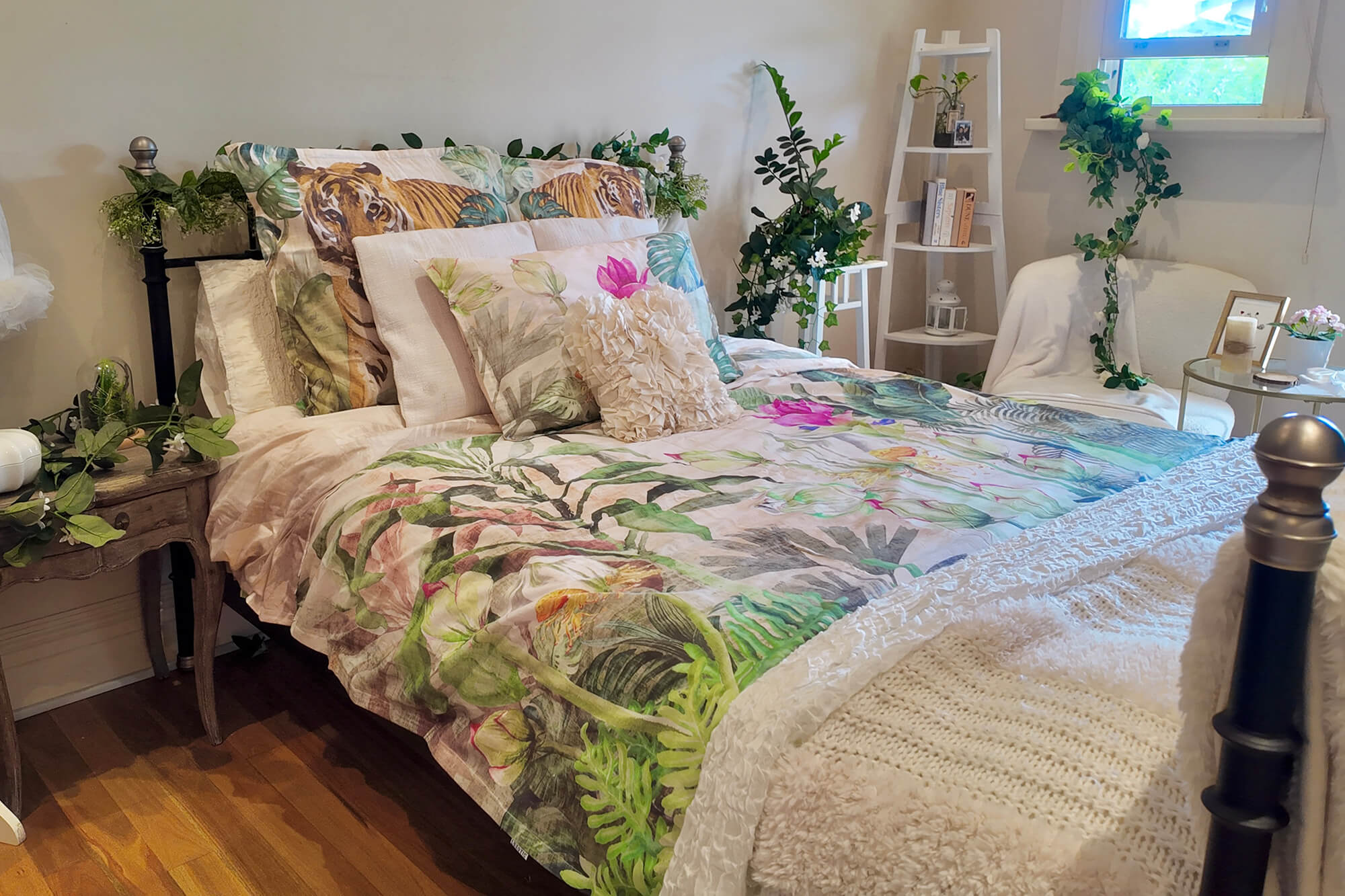
Aria Black. Dark and architectural — for bedrooms that favour depth and atmosphere. View Aria Black →
A Shift Toward Inward Design
There is a broader shift happening in how people approach their homes. Rooms are being shaped increasingly around personal experience rather than external perception — around how a space feels to be in rather than how it looks in a photograph or from someone else's perspective.
The bedroom is the natural centre of this shift. It does not need to follow trends or respond to what is expected of a room. It can remain personal, evolving slowly over time, without needing to justify its choices to anyone.
This does not mean the space needs to become minimal or quiet. For some people, the bedroom that feels most personal is bold — rich colour, expressive pattern, a design that would feel too strong in a shared room but feels exactly right in one designed only for them. For others, it is genuinely restrained. The point is that the choice is made on the basis of personal feeling, not convention.
In this way, the bedroom becomes a reflection of how you want to feel, rather than how you want to be seen.
Start with what you actually respond to. Not what seems safe or coordinates with the living room. What produces a genuine emotional response when you encounter it. Colour, pattern, and material chosen on this basis tend to hold their meaning over time in a way that conventionally chosen things rarely do.
Give the bed more than a background role. It is the largest surface in the room and the one you are most directly in contact with. When it carries a design that feels personally chosen, the entire room changes character. Everything else recedes into a supporting role, which is exactly where it should be.
Allow it to be different from the rest of the home. The bedroom does not need to coordinate with shared spaces. It can have a completely different character — darker, more saturated, more expressive — without anything being wrong. The rooms serve different purposes. They can look different.
Design for return rather than display. The most meaningful spaces are the ones you return to without thinking. They do not demand attention, but they feel complete. The bedroom, when it is designed with intention, becomes one of these spaces — familiar without being repetitive, comfortable without being forgettable.
Designing for Return, Not Display
The most meaningful spaces in any home are the ones we return to without thinking. They do not require effort to appreciate. They do not need to be arranged before they feel right. They simply are — familiar, complete, and quietly sustaining.
The bedroom, when designed with genuine intention, becomes one of these spaces. It supports rest without requiring effort. It feels like yours without needing to announce it.
Bedding plays a central role in this. It is the first point of contact at the end of the day, and the last before the day begins again. When this element is chosen carefully — for how it feels, for the design it carries, for what it reflects back about who lives there — the entire room shifts.

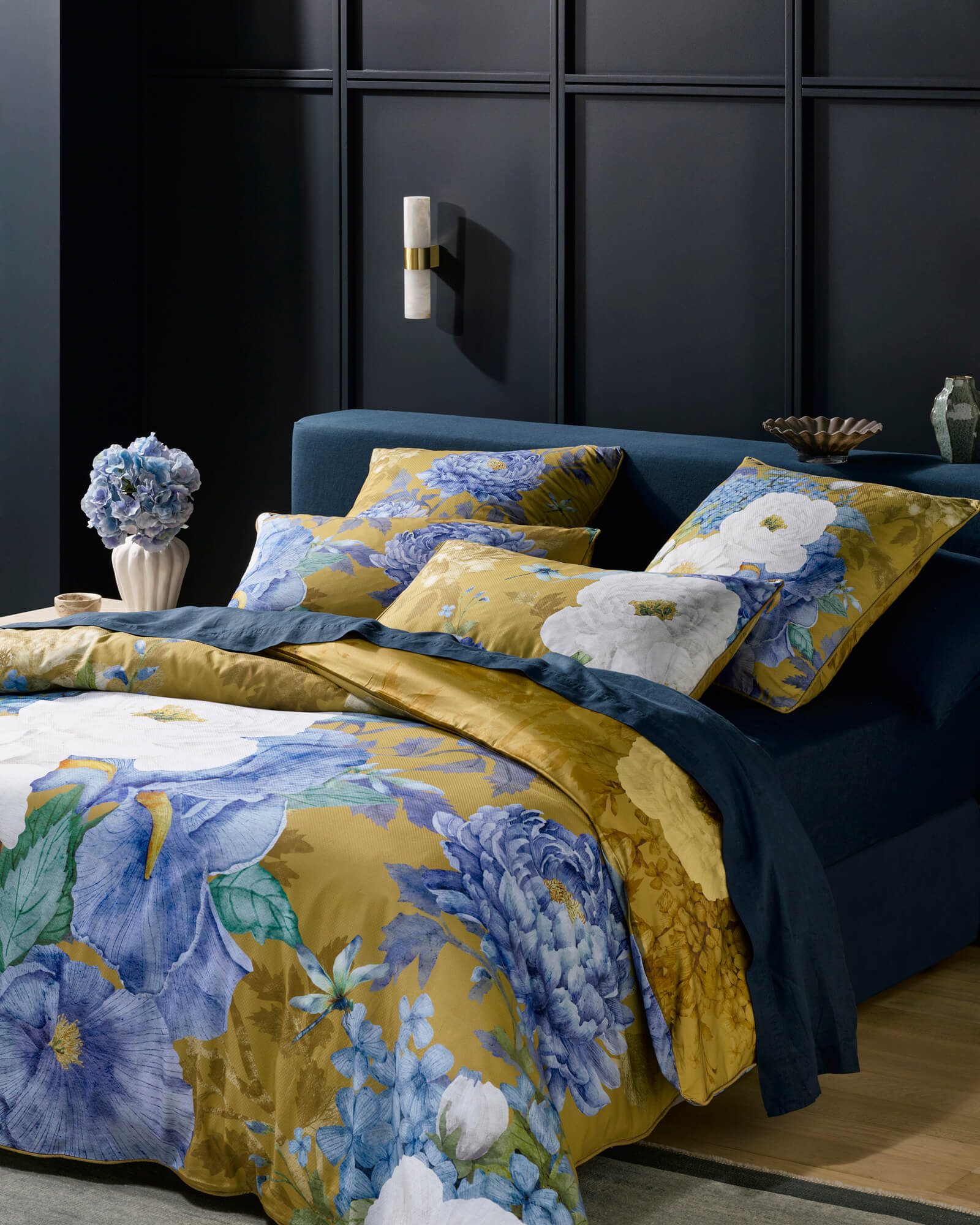
Gold Leaf Quilt Cover Set. A room designed for the person in it, rather than the people who might see it. View Gold Leaf →
A Room That Reflects You
Designing the bedroom for yourself does not require transformation. It begins with a single decision that feels genuinely aligned with how you want to feel in the space — a colour that grounds you, a pattern that feels like yours, a fabric that carries a particular quality of comfort.
Over time, small decisions made on this basis build a room that feels personal rather than styled. A space that exists quietly, outside of the rest of the home, without needing to justify itself.
That is what makes the bedroom singular. It is the one place in the home where design can be entirely and without compromise your own. The question is simply whether you choose to use that.
The Luxotic Signature Series begins as original hand-painted artwork — designed for bedrooms where the choice of what goes on the bed is made entirely for the person who sleeps in it.
