Article: The View from the Bed
The View from the Bed
We spend so much time considering how a bedroom looks when we enter it.
What about the view when we are actually in bed?
Most bedrooms are designed from the doorway.
We stand at the entrance and consider the bed, the artwork, the balance of the room and how everything sits together. It is also the angle from which bedrooms are most often photographed.
But it is not the view we live with.
Once we climb into bed, the room rearranges itself. The doorway moves to the background. Windows, ceilings, artwork, light and the objects opposite us become the things we actually see.
Perhaps a bedroom should be considered from the bed out, not only from the doorway in.

The room looks different from here
Lie down and familiar things change.
Furniture that felt prominent when standing may disappear from view. A window suddenly becomes more important. The ceiling occupies far more of your vision than you realised. An artwork across the room becomes something you see every morning.
Even the proportions of the space can feel different.
It is an interesting contradiction. The bed is usually the visual centre of a bedroom, yet once we are using it, the bed itself largely disappears.
What remains is everything around it.
This shift in perspective can reveal things that are easy to miss when decorating from the doorway. A blank wall may feel more noticeable. A beautiful window may deserve to remain unobstructed. Something placed purely for symmetry might make less sense when viewed from where you actually spend time.
A bedroom is not only a composition to look at.
It is a place to look from.
What do you wake up to?
There is something particularly revealing about the first view of the day.
Perhaps it is a tree outside the window. An artwork collected years ago. A chair with yesterday's clothes over the back. Morning light moving slowly across a wall.
These things may never appear in a photograph of the room, but they become part of our experience of living there.
It raises a different set of questions from the ones we usually ask when decorating.
Not simply, does this look good here?
But, do I enjoy looking at it from bed?
That distinction can change where artwork hangs, how furniture is positioned or even which objects deserve a place in the room.
It can also make the bedroom feel more personal. The most meaningful view does not necessarily need to be the most impressive one.
Sometimes it is simply something you are pleased to see when you open your eyes.

Follow the light
Light makes this perspective even more interesting.
From bed, we experience a bedroom across different hours rather than as one fixed image.
Morning light might fall across one side of the room. By afternoon, it has moved somewhere else. At night, a bedside lamp creates an entirely different composition, leaving some objects illuminated and allowing others to recede.
Colour changes with it.
A painted wall can appear cooler in the morning and warmer later in the day. Pattern becomes more pronounced in certain light and softer in others. Shadows introduce shapes that were never deliberately designed at all.
The room is constantly editing itself.
Perhaps that is why the most memorable bedrooms are not necessarily the ones where every detail can be appreciated at once. They are the ones that reveal themselves differently as the day moves through them.
Look beyond the bed
Because the bed is usually the largest object in the room, it naturally receives much of our attention.
We choose what covers it. What sits behind it. What hangs above it. What stands on either side.
But designing from the bed out shifts some of that attention elsewhere.
The wall opposite might become an opportunity for a painting rather than another piece of furniture. A window could be allowed to remain the focus instead of being heavily dressed. A beautiful pendant might matter as much from below as it does from across the room.
Even the ceiling becomes part of the interior.
It is perhaps the largest uninterrupted surface we see while lying down, yet one of the least considered when bedrooms are decorated.
There is no requirement to fill these spaces. Sometimes noticing them is enough.
A room can be interesting without every surface asking for attention.
The things within reach
The view from the bed is not only about what is across the room.
It is also about what is close.
A book left open. A glass of water. A lamp switched on without getting up. The texture of fabric gathered beside you.
At this distance, interiors become less about composition and more about touch.
Pattern is no longer something viewed from across the bedroom. It becomes colour and line seen at close range. Fabric folds rather than sits perfectly. The arrangement made in the morning changes through use.
This is where bedding becomes part of the room in a different way.
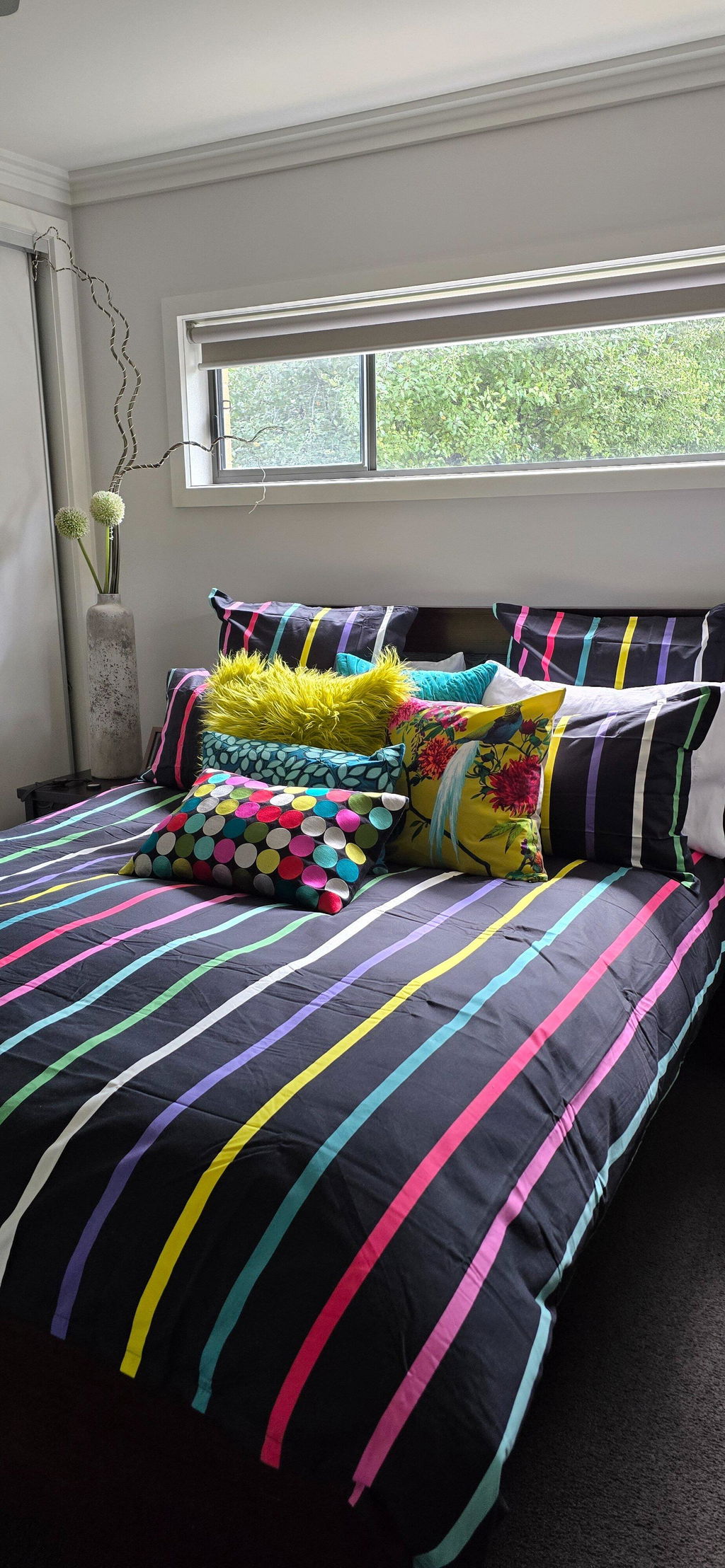
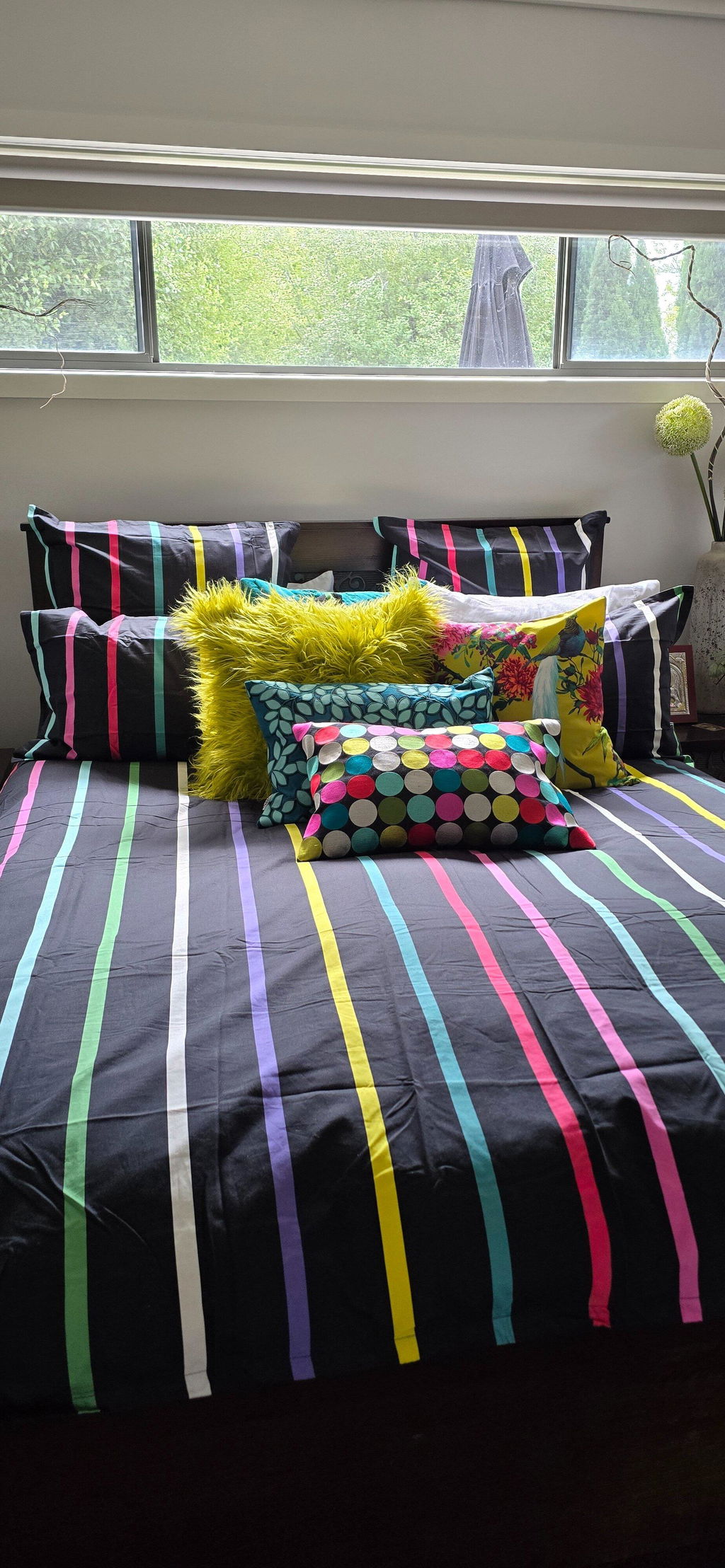
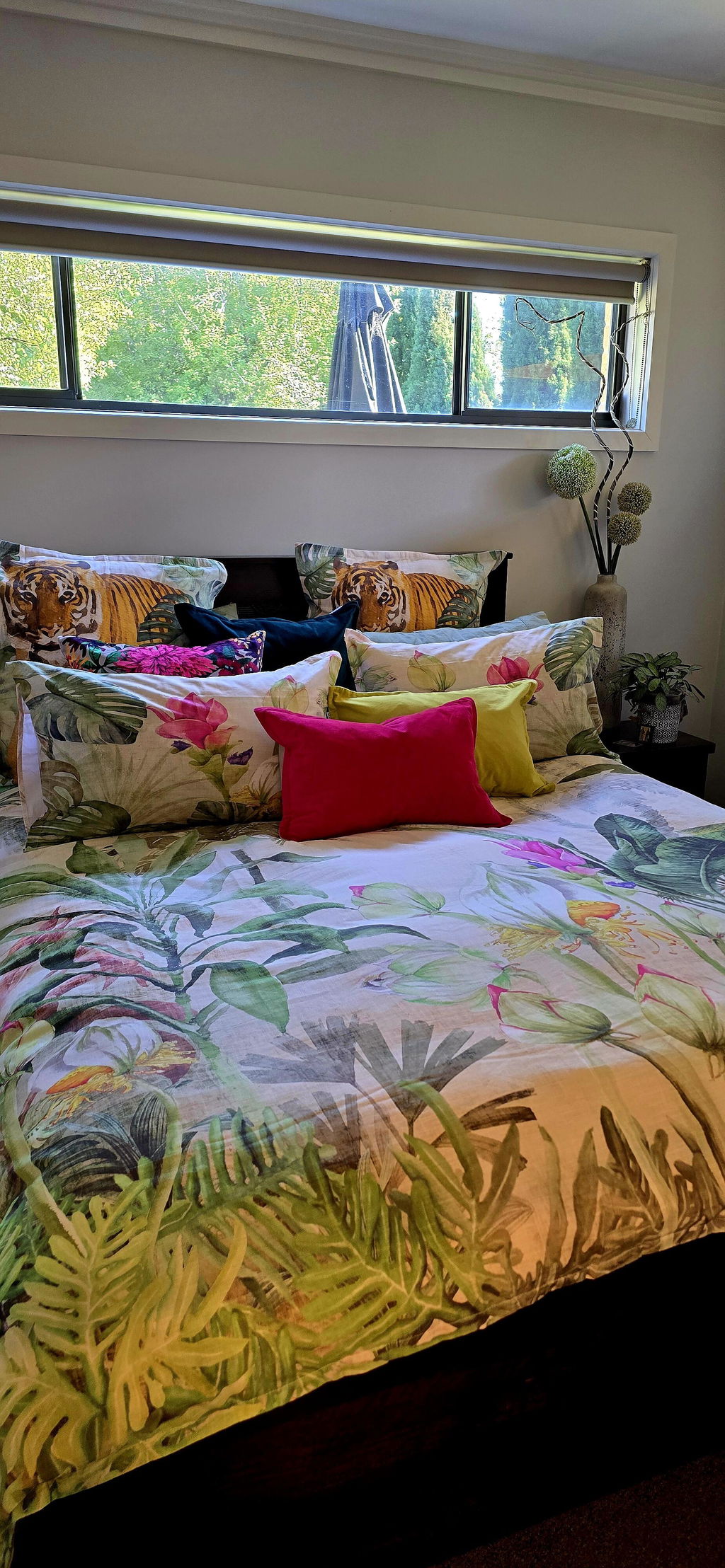
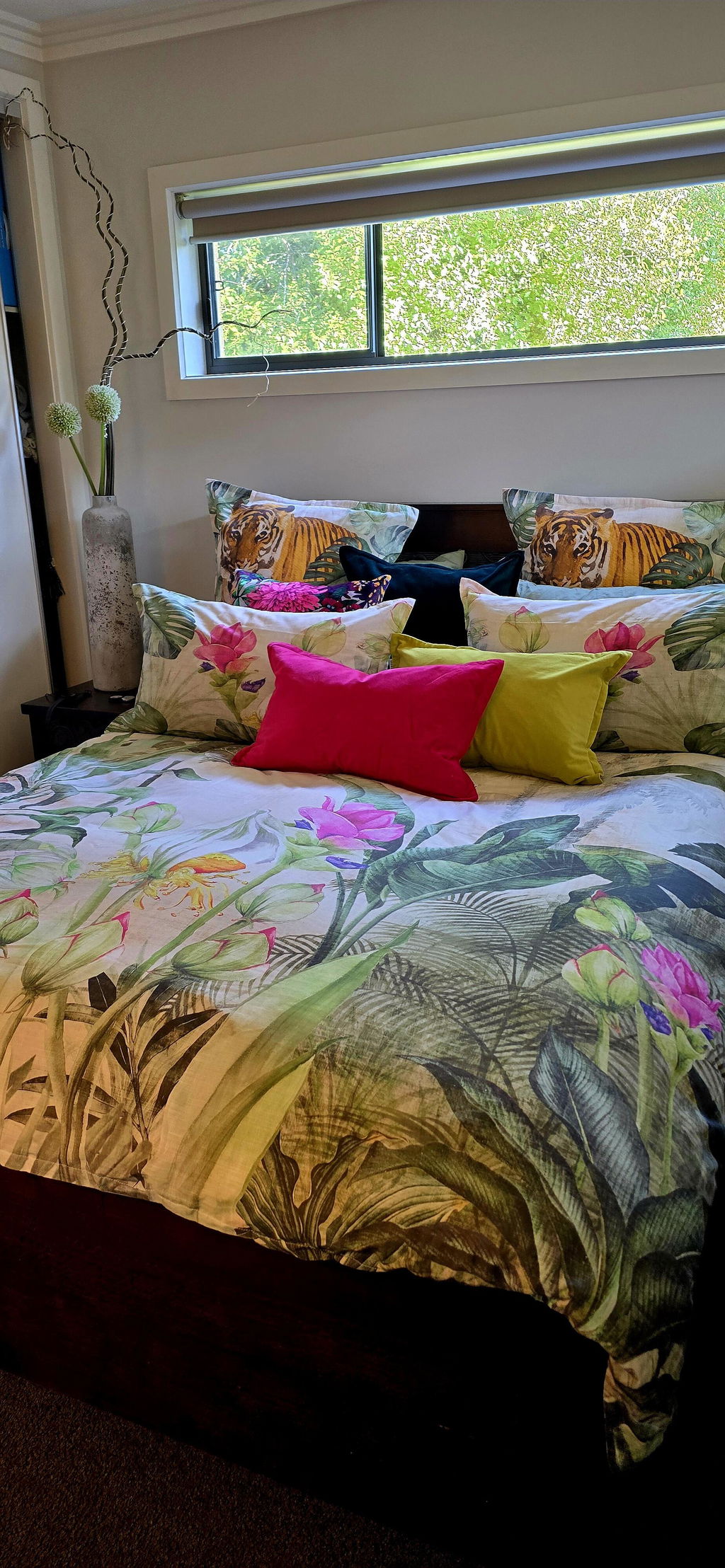
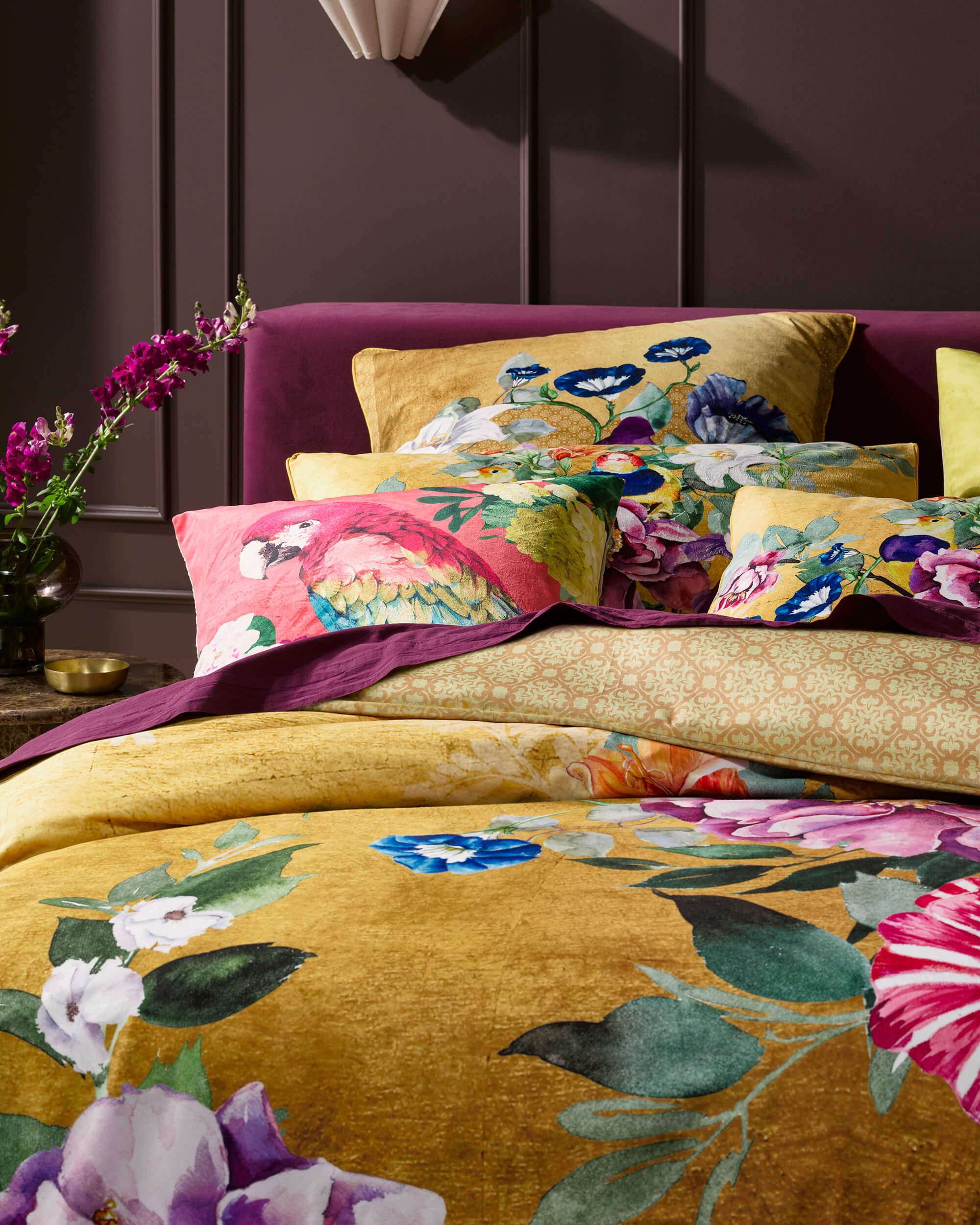
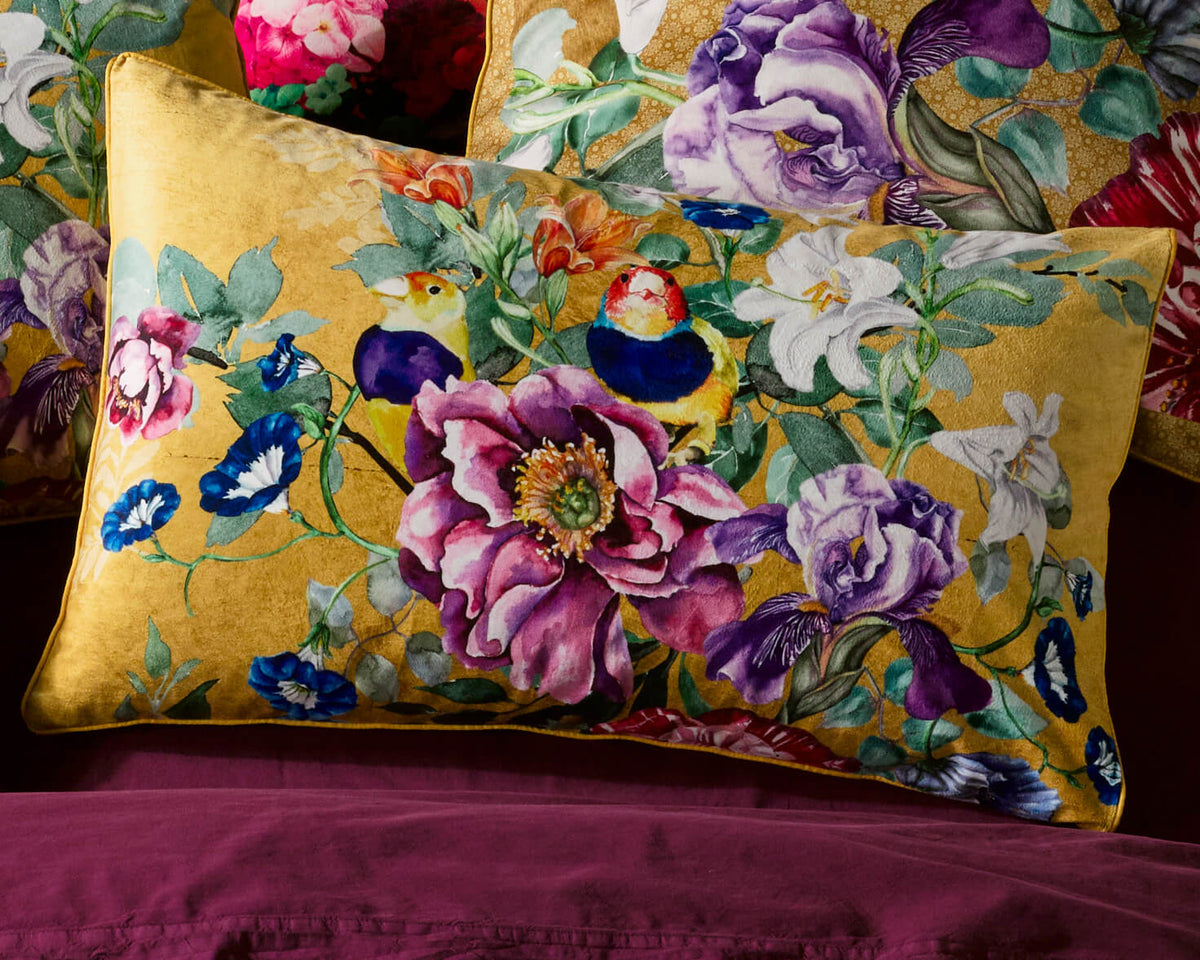
Luxotic's hand-painted designs begin as artworks, but on the bed they are experienced much closer than a painting on a wall. In a design such as Gold Leaf, portions of the artwork appear and disappear as the fabric moves. What reads as a complete composition from the doorway becomes fragments of colour, line and detail when viewed from within it.
That change in scale is part of what makes textiles interesting in an interior.
They are not static.

Gold Leaf seen at close range, where individual details become part of the view from within the bed.
A bedroom is experienced, not observed
Perhaps this is the difference between a bedroom that photographs beautifully and one that feels good to inhabit.
A photograph asks us to stand outside the room and take everything in at once.
Living in it is different.
We see the ceiling while lying down. We notice the changing light. We reach for the same lamp each evening. We become familiar with one corner of an artwork because it happens to sit directly in our line of sight.
Over time, those small perspectives become the room we remember.
So the next time you consider changing a bedroom, there may be another place to begin.
Not at the doorway.
From the bed.
Featured: Gold Leaf Quilt Cover Set